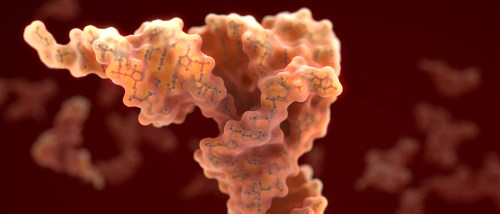
Scientists Close to Uncovering RNA Mystery

Moving Backward to Go Forward

DNA, RNA, and protein: these have been the premier scientific buzzwords in our lives since we picked up our first science textbooks in elementary school. However, there was always one thing that the science textbook never really got around to explaining: what came first the chicken or the egg? Or in our case, RNA or protein?

Scientists at The Scripps Research Institute (TSRI) have taken steps to answer the long-standing question to verify the validity of the RNA world hypothesis. The Museum of Science explains that according to the RNA World Hypothesis, “earlier forms of life may have relied solely on RNA to store genetic information and to catalyze chemical reactions. Later life evolved to use DNA and proteins due to RNA’s relative instability and poorer catalytic properties, and gradually, ribozymes became increasingly phased out.”

In short, to test this, the team has decided to build their own biological time machine to take them back 4 billion years—all by synthesizing a primordial RNA-based enzyme, a ribozyme, that has never been seen before.

The team of scientist sought to verify the two major tenets of the RNA world hypothesis:

  1. The ribozyme must be able to replicate RNA.
  2. The ribozyme must be able to transcribe RNA.

Here is a brief video describing both replication and transcription from a DNA perspective:

A Primordial Hunger Games

The scientists employed natural selection in their process to uncover evidence for the RNA world hypothesis. Building upon decades of research, the researchers made over 100 trillion variants of the class I RNA polymerase ribozyme, a molecule that theoretically could replicate and transcribe RNA.

After twenty-four rounds of experiments, the TSRI team stumbled upon polymerase ribozyme 24-3, which was able to replicate and transcribe RNA better than the team had hoped. With the new molecule synthesizing RNA molecules at a rate that is one hundred times quicker than the original start molecule, and replicating at a rate deemed as exponential replication, with forty thousand copies produced in just 24 hours.

The scientists believe that “a  polymerase ribozyme that achieves exponential amplification of itself will meet the criteria for being alive.” Providing support for the RNA world hypothesis.

Now that’s one for both history and science textbooks.

The article was published in the Proceedings of the National Academy of Sciences

Rosetta’s comet contains ingredients for life

27 May 2016

Ingredients regarded as crucial for the origin of life on Earth have been discovered at the comet that ESA’s Rosetta spacecraft has been probing for almost two years.

They include the amino acid glycine, which is commonly found in proteins, and phosphorus, a key component of DNA and cell membranes.

Scientists have long debated the important possibility that water and organic molecules were brought by asteroids and comets to the young Earth after it cooled following its formation, providing some of the key building blocks for the emergence of life.

While some comets and asteroids are already known to have water with a composition like that of Earth’s oceans, Rosetta found a significant difference at its comet – fueling the debate on their role in the origin of Earth’s water.

But new results reveal that comets nevertheless had the potential to deliver ingredients critical to establish life as we know it.

Rosetta’s comet contains ingredients for life

Amino acids are biologically important organic compounds containing carbon, oxygen, hydrogen and nitrogen, and form the basis of proteins.

Hints of the simplest amino acid, glycine, were found in samples returned to Earth in 2006 from Comet Wild-2 by NASA’s Stardust mission. However, possible terrestrial contamination of the dust samples made the analysis extremely difficult.

Now, Rosetta has made direct, repeated detection of glycine in the fuzzy atmosphere or ‘coma’ of its comet.

“This is the first unambiguous detection of glycine at a comet,” says Kathrin Altwegg, principal investigator of the ROSINA instrument that made the measurements, and lead author of the paper published in Science Advances today.

“At the same time, we also detected certain other organic molecules that can be precursors to glycine, hinting at the possible ways in which it may have formed.”

The measurements were made before the comet reached its closest point to the Sun – perihelion – in August 2015 in its 6.5 year orbit.

The first detection was made in October 2014 while Rosetta was just 10 km from the comet. The next occasion was during a flyby in March 2015, when it was 30–15 km from the nucleus.

Glycine was also seen on other occasions associated with outbursts from the comet in the month leading up to perihelion, when Rosetta was more than 200 km from the nucleus but surrounded by a lot of dust.

“We see a strong link between glycine and dust, suggesting that it is probably released perhaps with other volatiles from the icy mantles of the dust grains once they have warmed up in the coma,” says Kathrin.

Glycine turns into gas only when it reaches temperatures just below 150°C, meaning that usually little is released from the comet’s surface or subsurface because of the low temperatures. This accounts for the fact that Rosetta does not always detect it.

“Glycine is the only amino acid that is known to be able to form without liquid water, and the fact we see it with the precursor molecules and dust suggests it is formed within interstellar icy dust grains or by the ultraviolet irradiation of ice, before becoming bound up and conserved in the comet for billions of years,” adds Kathrin.

Another exciting detection made by Rosetta and described in the paper is of phosphorus, a key element in all known living organisms. For example, it is found in the structural framework of DNA and in cell membranes, and it is used in transporting chemical energy within cells for metabolism.

“There is still a lot of uncertainty regarding the chemistry on early Earth and there is of course a huge evolutionary gap to fill between the delivery of these ingredients via cometary impacts and life taking hold,” says co-author Hervé Cottin.

“But the important point is that comets have not really changed in 4.5 billion years: they grant us direct access to some of the ingredients that likely ended up in the prebiotic soup that eventually resulted in the origin of life on Earth.”

“The multitude of organic molecules already identified by Rosetta, now joined by the exciting confirmation of fundamental ingredients like glycine and phosphorous, confirms our idea that comets have the potential to deliver key molecules for prebiotic chemistry,” says Matt Taylor, ESA’s Rosetta project scientist.

“Demonstrating that comets are reservoirs of primitive material in the Solar System and vessels that could have transported these vital ingredients to Earth, is one of the key goals of the Rosetta mission, and we are delighted with this result.”

Notes for Editors

“Prebiotic chemicals – amino acid and phosphorus – in the coma of comet 67P/Churyumov–Gerasimenko”, by K. Altwegg et al is published in the journal Science Advances.

Original article: http://www.esa.int/Our_Activities/Space_Science/Rosetta/Rosetta_s_comet_contains_ingredients_for_life